
%20(23).png)
Finding the right nonprofit software is critical in today's landscape. After all, donors expect personalized engagement, data-driven stewardship, and seamless giving experiences. Nonprofit teams need unified systems that centralize data, automate repetitive tasks, and deliver analytics that drive strategy.
This guide shows the top nonprofit software solutions across key categories — CRM, donor management, fundraising, events, grants, and more — so you can pick the right tech to power your mission. We also break down the features, benefits, and real-world use cases for each tool type.

How We Evaluated These Nonprofit Software Platforms
To build this list, we evaluated nonprofit software solutions based on how well they support fundraising, donor engagement, and organizational growth.
Each platform was reviewed across several criteria, including:
- Breadth of functionality and core focus
- Ability to unify donor, fundraising, and engagement data
- Support for recurring giving and donor retention
- Automation capabilities that reduce manual work
- Reporting and analytics for leadership and boards
- Scalability as nonprofit operations become more complex
This guide is not meant to suggest that one tool fits every organization. Instead, it is designed to help nonprofit leaders understand what the differences in systems are and how to choose software that aligns with both current needs and long-term growth.
You'll notice that CharityEngine isn't on the list, even though we offer nonprofit software. We could be! But our goal is to provide nonprofits with an unbiased list of vendors. If we throw our own hat into the ring, it's no longer unbiased.
If you want to learn about CharityEngine, just book a quick call with us. Otherwise, here's a list that we think will be helpful.

Nonprofit Software Comparison at a Glance
Here’s a quick side-by-side view of commonly compared platforms.
|
Platform |
Category |
Core strength |
Best for |
|
CRM platform |
Customization and ecosystem |
Enterprise orgs with technical resources and budgets for configuration |
|
|
Donor management + CRM |
Retention-focused donor management |
Small to mid-sized orgs prioritizing donor retention and ease of use |
|
|
CRM + marketing automation |
Responsive fundraising and personalization |
Mid-sized orgs focused on digital engagement and donor journeys |
|
|
Donor management |
Stable donor and gift tracking |
Small to mid-sized orgs needing dependable donor management |
|
|
Nonprofit software suite |
Modular CRM, fundraising, memberships |
Associations and orgs that need memberships and modular tools |
|
|
CRM + programs |
Donor + volunteer + program/case management |
Service nonprofits managing programs and fundraising together |
|
|
Fundraising CRM |
Enterprise fundraising database and major gifts |
Large fundraising teams running complex development programs |
|
| Little Green Light | Donor Management | Affordable reporting and flexibility | Small nonprofits with limited budgets |
| Kindful (now Bloomerang) | Donor Management | Clean database with integrations | Orgs pairing a CRM with best-of-breed tools |
|
GoFundMe Pro (formerly Classy) |
Fundraising platform |
Peer-to-peer and digital campaigns |
Digitally mature orgs running major online campaigns |
|
Online giving |
Conversion optimization |
Orgs focused on maximizing online donation performance |
|
|
Qgiv (now Bloomerang Fundraising) |
Fundraising platform |
Multichannel fundraising and text giving |
Orgs running diverse campaigns across channels |
|
Online giving |
Simple forms and recurring giving |
Small orgs needing fast, affordable donation forms |
|
| Fundraising platform |
Free, modern peer-to-peer fundraising |
Grassroots and early-stage nonprofits |
|
| Event management | Ticketing and registrations |
Standalone events |
|
| Event fundraising |
Auctions, galas, peer-to-peer events |
Orgs hosting large fundraising events |
|
| Auction software |
Mobile bidding and event payments |
Auction-driven fundraising events |
|
| Grant management |
Grant prospecting and pipeline tracking |
Orgs actively managing grants |
|
| Grant discovery + management |
Grant prospecting and pipeline tracking |
Orgs building grant programs | |
| Donor intelligence |
Wealth screening and donor insights |
Major gift prospecting |
|
| Prospect research |
Prospect research |
Major donor identification |
Before diving in, it helps to understand how the nonprofit software landscape has evolved. Over the past several years, many independent providers of fundraising software and donor management tools have been acquired by larger software companies. As a result, multiple products may now share the same parent organization, even though they continue to operate under separate brand names.
These acquisitions have expanded product suites but also introduced tradeoffs around flexibility, implementation complexity, and customer experience. For clarity, this guide references the product names nonprofits recognize most.
Below, nonprofit software solutions are grouped by common use cases to make it easier to compare tools based on how organizations actually operate.
Nonprofit CRM and Constituent Management Software
These are systems of record for donor data, relationships, and core fundraising operations. You can read more about nonprofit CRMs and the many choices nonprofits have.
Salesforce for Nonprofits
Salesforce for Nonprofits is a highly customizable CRM built on the well-known Salesforce platform. It is used by large, complex organizations that need flexibility and are willing to invest in configuration and ongoing maintenance.

Why nonprofits choose Salesforce
- Highly customizable data models and workflows
- Large ecosystem of third-party apps and integrations
- Strong reporting and dashboard capabilities
- Suitable for complex organizational structures
Best for
Large or enterprise nonprofits with internal technical teams or budgets for consultants and long implementation timelines.
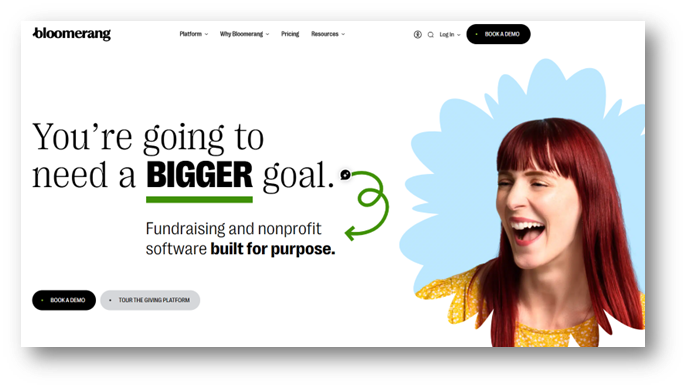
Bloomerang
Bloomerang is a donor management and CRM platform known for its focus on donor retention metrics and ease of use. Many nonprofits use Bloomerang as a core database alongside separate fundraising and engagement tools.
Why nonprofits choose Bloomerang
- Simple, user-friendly interface
- Donor engagement and retention scoring
- Built-in email tools
- Strong onboarding for small teams
Best for
Small to mid-sized nonprofits that prioritize donor retention insights and are comfortable using multiple tools.
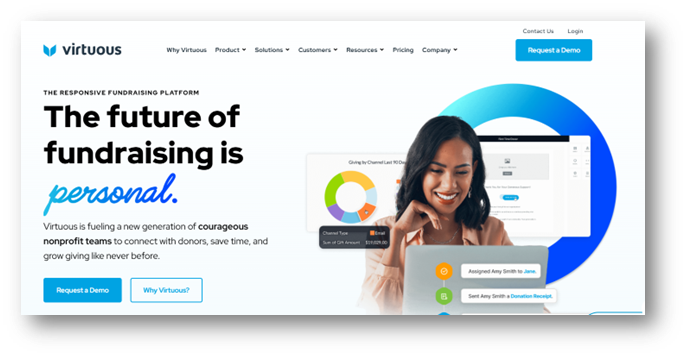
Virtuous
Virtuous positions itself as a responsive CRM with built-in marketing automation and personalization tools. It emphasizes donor journeys and engagement-driven fundraising.
Why nonprofits choose Virtuous
- Marketing automation and donor journey tools
- Personalization based on donor behavior
- AI-assisted engagement features
- Modern interface designed for growth teams
Best for
Mid-sized nonprofits focused on digital engagement and responsive fundraising strategies.
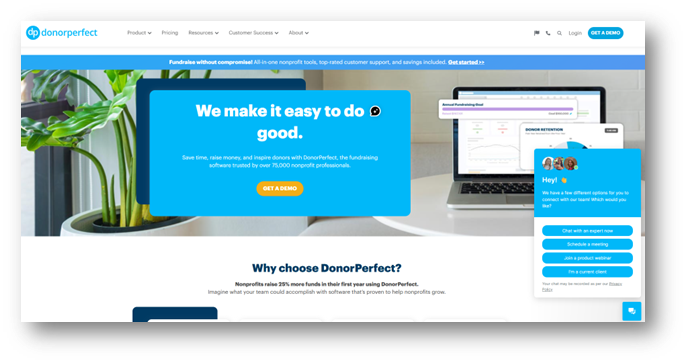
DonorPerfect
DonorPerfect is a long-standing donor management system that provides core fundraising and reporting functionality. It is often used by organizations looking for a stable, familiar platform.
Why nonprofits choose DonorPerfect
- Robust donor and gift tracking
- Customizable reports
- Built-in acknowledgments and workflows
- Wide adoption across the nonprofit sector
Best for
Small to mid-sized nonprofits that need reliable donor management without advanced automation.
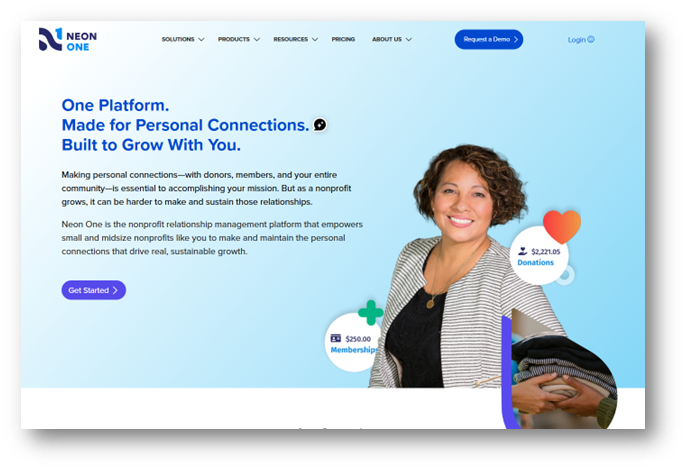
Neon One
Neon One offers a suite of nonprofit tools, including CRM, fundraising, membership, and event management. Products are modular, allowing organizations to add functionality over time.
Why nonprofits choose Neon One
- Flexible, modular product structure
- Strong support for memberships and associations
- Integrated fundraising and event tools
- Nonprofit-focused reporting
Best for
Associations and nonprofits with memberships or program-based engagement.
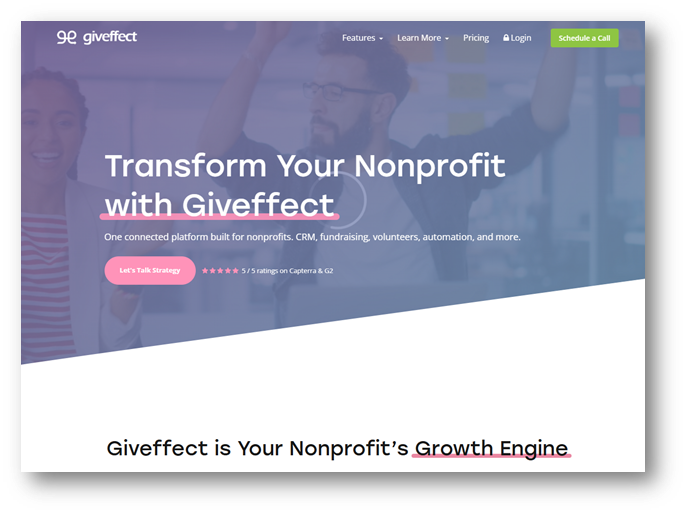
Giveffect
Giveffect combines donor management, fundraising, volunteer tracking, and case management into a single platform. It is often used by community-based nonprofits delivering direct services.
Why nonprofits choose Giveffect
- Integrated donor and volunteer management
- Case and program tracking tools
- Fundraising and CRM functionality in one system
- Support for service-oriented nonprofits
Best for
Community-based organizations managing both fundraising and programs.
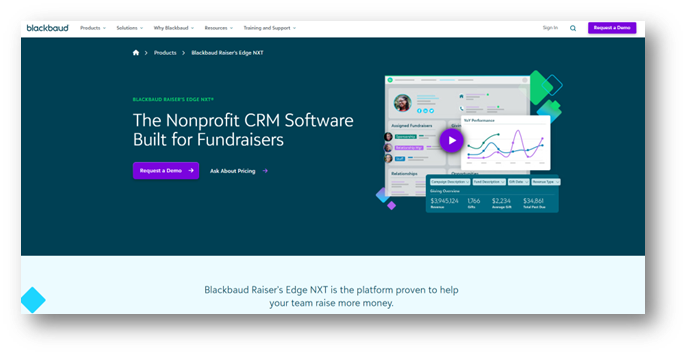
Blackbaud Raiser’s Edge NXT
Raiser’s Edge NXT is a fundraising CRM designed for enterprise nonprofits. It offers deep donor management capabilities but often relies on additional Blackbaud products for full functionality.
Why nonprofits choose Raiser’s Edge NXT
- Enterprise-grade donor tracking
- Advanced fundraising and reporting tools
- Strong support for major gift programs
- Long-standing presence in the nonprofit sector
Best for
Large, complex nonprofits with dedicated fundraising teams.
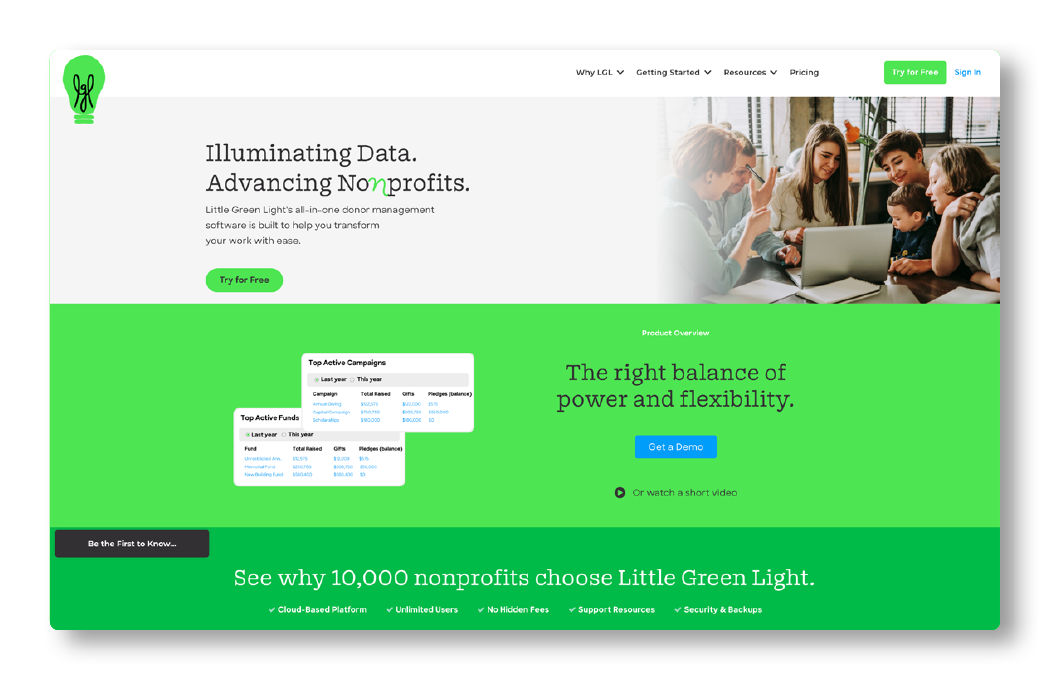
Little Green Light
Little Green Light is an affordable donor management system known for flexibility and strong reporting features.
Why nonprofits choose Little Green Light
- Cost-effective pricing
- Customizable reports and fields
- Integration with popular fundraising tools
- Easy setup and administration
Best for
Small nonprofits with limited budgets that still need solid reporting.
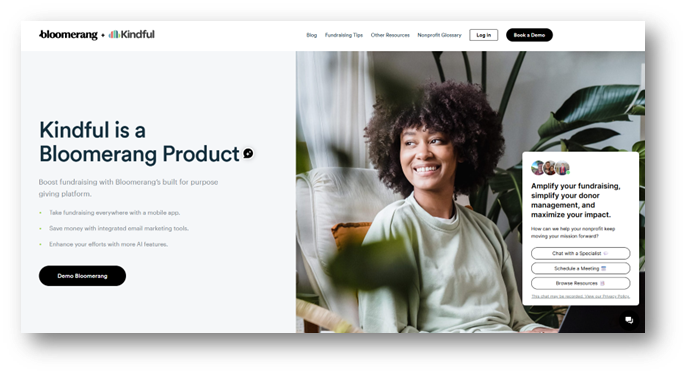
Kindful (Now Bloomerang)
Kindful provides donor management with a focus on integrations. It is often paired with external email marketing and fundraising platforms.
Why nonprofits choose Kindful
- Clean donor database management
- Strong integrations with Mailchimp, Classy, and others
- Simple setup and navigation
- Support for recurring giving
Best for
Nonprofits that prefer a lightweight donor database paired with best-of-breed tools.
Fundraising and Online Giving Software
These are tools primarily used to accept donations, run campaigns, and optimize online giving. If you want to dive deeper into choices for fundraising software, we've compiled a resource.
GoFundMe Pro (formerly Classy)
GoFundMe Pro now owns Classy. The software is a digital fundraising platform known for peer-to-peer fundraising and modern donation experiences.
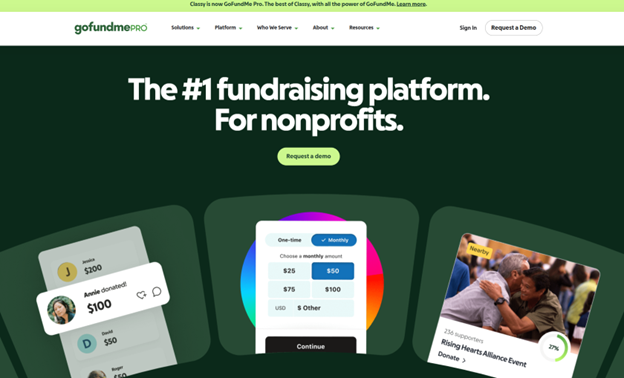
Why nonprofits choose Classy
- Strong peer-to-peer fundraising tools
- Modern, mobile-friendly donation pages
- Campaign and event fundraising support
- Designed for digital-first organizations
Best for
Digitally mature nonprofits running large-scale online campaigns.
Fundraise Up
Fundraise Up focuses on increasing conversion rates through AI-driven optimization and donor-friendly checkout experiences.
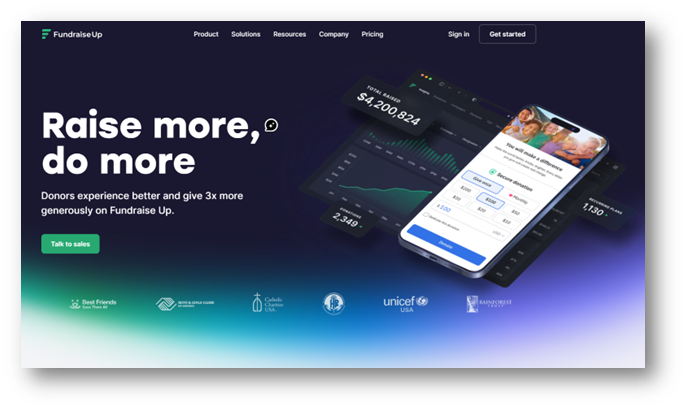
Why nonprofits choose Fundraise Up
- AI-powered donation optimization
- Smart ask amounts and prompts
- Fast, frictionless checkout
- Strong recurring giving support
Best for
Nonprofits focused on maximizing online donation performance.
Qgiv (Now Bloomerang Fundraising)
Qgiv remains intact under Bloomerang (though it has been renamed Bloomerang Fundraising) and it offers online fundraising, text-to-give, peer-to-peer fundraising, and event tools. It is frequently paired with donor CRMs.
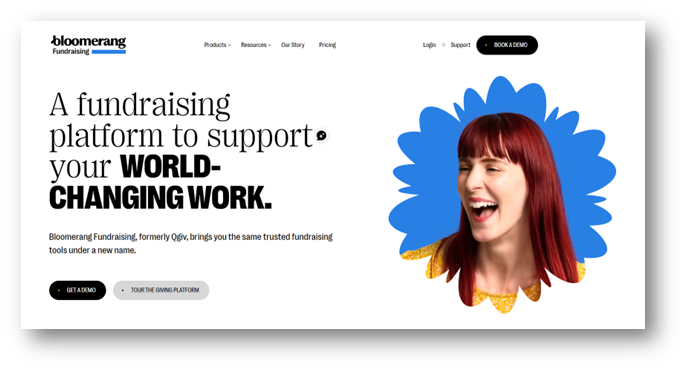
Why nonprofits choose Qgiv
- Multi-channel fundraising tools
- Text-to-give and event support
- Customizable donation forms
- CRM integrations
Best for
Nonprofits running diverse fundraising campaigns across channels.
Donorbox
Donorbox is a lightweight donation and recurring giving tool commonly used with websites and CMS platforms.

Why nonprofits choose Donorbox
- Easy-to-embed donation forms
- Strong recurring giving support
- Low setup overhead
- Affordable pricing
Best for
Small nonprofits and startups focused on online giving.
Givebutter
Givebutter is a free fundraising platform that supports donations, events, and peer-to-peer fundraising.
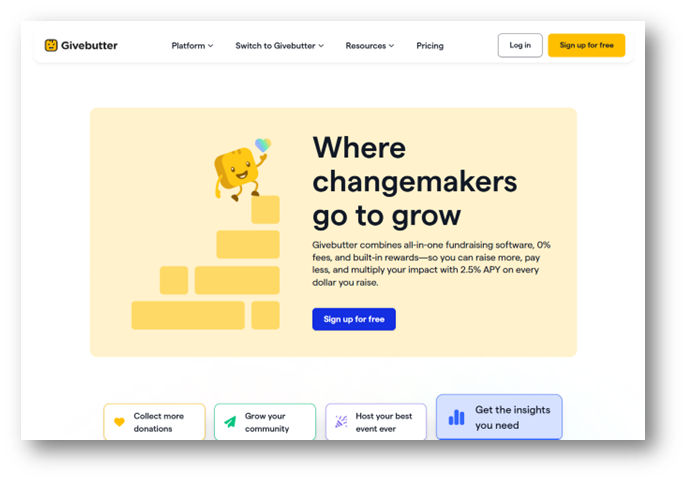
Why nonprofits choose Givebutter
- Free platform with optional fees
- Peer-to-peer and event fundraising
- Simple setup
- Appeals to younger donor bases
Best for
Grassroots organizations and early-stage nonprofits.
Event and Peer-to-Peer Fundraising Software
These are platforms designed for ticketing, auctions, and event-driven fundraising. We've got a list of all the options!
Eventbrite
Eventbrite is a general event management platform commonly used by nonprofits for ticketed events.
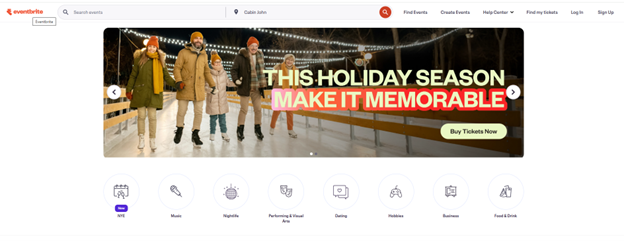
Why nonprofits choose Eventbrite
- Simple event setup and ticketing
- Wide consumer adoption
- Promotion and registration tools
- Easy to use
Best for
Standalone events that do not require deep donor integration.
OneCause
OneCause specializes in fundraising events, auctions, and peer-to-peer campaigns.
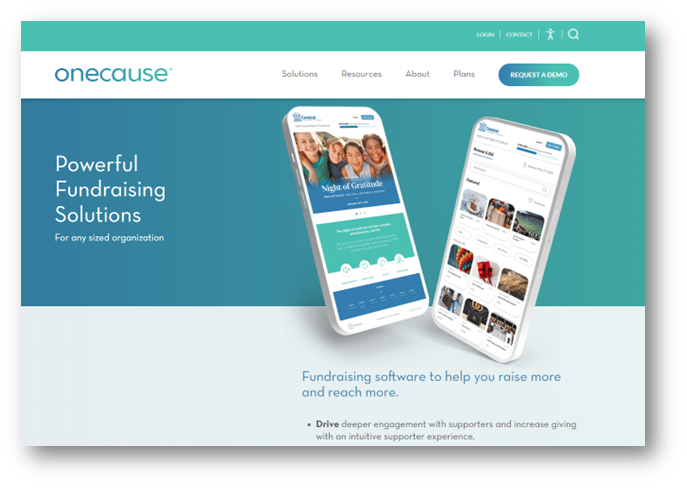
Why nonprofits choose OneCause
- Auction and gala fundraising tools
- Mobile bidding and check-in
- Peer-to-peer event support
- Event-focused reporting
Best for
Nonprofits running large fundraising events and galas.
Handbid
Handbid provides mobile auction and event fundraising software for nonprofits.
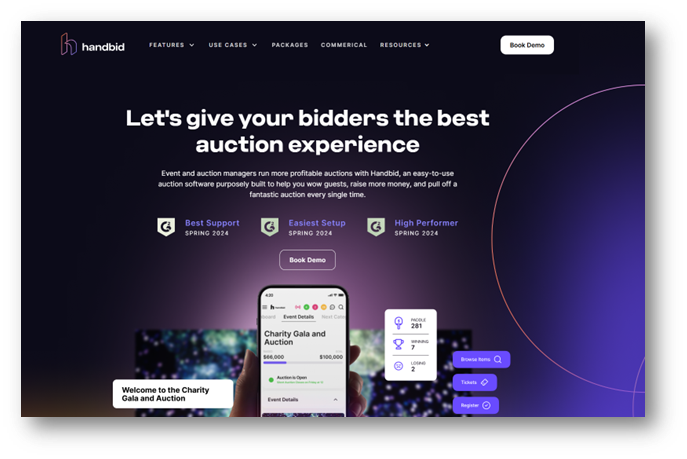
Why nonprofits choose Handbid
- Mobile bidding and payments
- Event and auction management
- Sponsorship and ticketing tools
- On-site event support
Best for
Nonprofits hosting auctions and in-person fundraising events.
Grant Management Software
These tools focus on tracking grant applications, deadlines, and reporting. If you want a primer on how grants work and help nonprofits, we've got you covered.
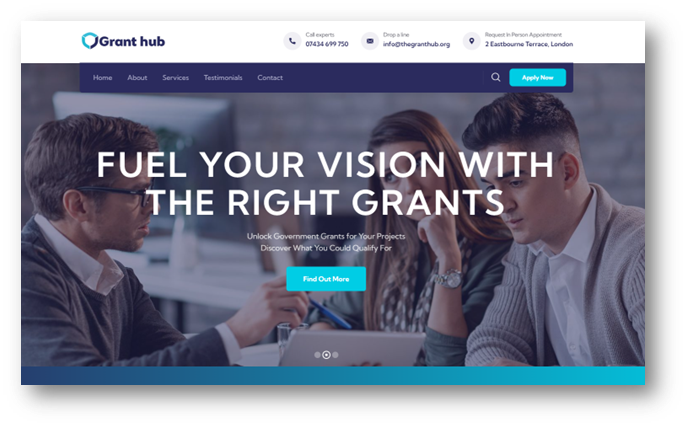
Grant Hub
GrantHub helps nonprofits manage grant applications, deadlines, and reporting.
Why nonprofits choose GrantHub
- Centralized grant tracking
- Deadline and reporting reminders
- Grant pipeline visibility
- Team collaboration tools
Best for
Nonprofits actively pursuing foundation and government grants.
Instrumentl
Instrumentl focuses on grant discovery and management on a single platform.

Why nonprofits choose Instrumentl
- Grant prospecting and research
- Application and deadline tracking
- Collaboration features
- Reporting on grant pipelines
Best for
Nonprofits building or scaling grant programs.
Donor Intelligence and Prospect Research Tools
Development teams use these tools to identify and qualify major gift prospects. This guide to moves management shows how these tools can be useful.
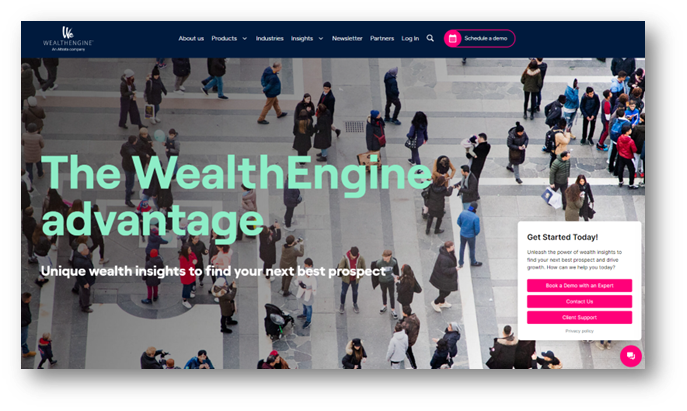
WealthEngine
WealthEngine provides donor intelligence and wealth screening tools.
Why nonprofits choose WealthEngine
- Wealth and capacity screening
- Donor insights for major gifts
- Prospect segmentation
- CRM integrations
Best for
Organizations with active major gift programs.
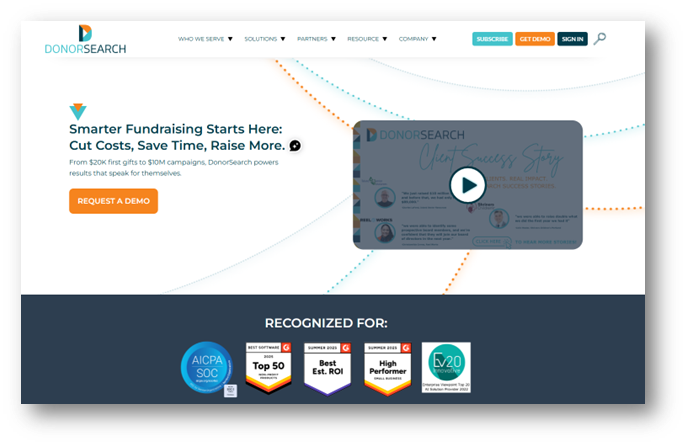
DonorSearch
DonorSearch offers prospect research and donor intelligence services.
Why nonprofits choose DonorSearch
- Wealth and philanthropic data
- Prospect identification
- Major gift prioritization
- Research support services
Best for
Nonprofits focused on major donor acquisition and qualification.
What Nonprofit Software Should Do
Most platforms focus on features. That’s the wrong starting point.
Modern nonprofit software should help you:
- Build predictable recurring revenue, not just get one-time gifts.
- Understand donors across their full lifecycle, not in silos
- Reduce manual work through automation, not more tools
- Give your board real-time, accurate, unified reporting
- Scale without breaking as you grow
Frequently Asked Questions About Nonprofit Software
What is the best nonprofit software in 2026?
The best nonprofit software in 2026 is one that unifies donor data, fundraising, automation, and reporting in a single system.
What is the difference between nonprofit CRM and donor management software?
A nonprofit CRM manages the full relationship between an organization and its supporters, including donations, communications, events, and engagement history. Donor management software typically focuses on storing donor records and gift history but offers fewer tools for automation, analytics, and multi-channel engagement.
Do nonprofits really need an all-in-one software platform?
Not every nonprofit needs an all-in-one platform right away. Smaller or early-stage organizations may succeed with standalone donor management or fundraising tools. As nonprofits grow, however, all-in-one platforms become more valuable by eliminating disconnected systems and providing a single source of truth.
How much does nonprofit software typically cost?
Nonprofit software pricing varies widely based on features, scale, and complexity. Entry-level tools may cost a few hundred dollars per year, while enterprise platforms can reach five or six figures annually. All-in-one platforms often reduce total cost by replacing multiple tools and lowering administrative overhead.
What software is best for recurring and monthly giving programs?
Software that treats recurring giving as a core strategy, not a feature, is best for monthly giving programs.
How should nonprofits choose the right software?
Nonprofits should start by identifying long-term goals, such as improving retention, growing recurring revenue, or simplifying operations. From there, evaluate whether a platform supports those outcomes, scales with growth, and provides unified, trustworthy data for decision-making.
Final Thoughts on Choosing the Best Nonprofit Software
There is no shortage of nonprofit software solutions, but very few are designed to work together as a complete system. Many tools solve individual problems well. Fewer help nonprofits grow predictable revenue, retain donors in the long term, and make decisions with confidence.
For organizations early in their journey, a donor management or fundraising tool may be enough. As complexity increases, disconnected systems create data silos, manual work, and reporting gaps that slow growth. That is where an all-in-one platform becomes essential.

Scale Your Fundraising
See how top-performing nonprofits keep a human touch while growing rapidly.
Schedule your 15-minute call.png)
%20(27).png)
%20(7).png)