
-2.png)
At its core, donor management software is a powerful tool for cultivating relationships, tracking giving history, personalizing outreach, and driving meaningful engagement. But when it comes to choosing the right platform, there are so many options—and each promises to transform the way your nonprofit engages supporters and raises money.
To help, we rounded up the best donor management platforms available on the market!
If you’re getting ready for a year-end campaign or preparing to look for a better tech stack, browse this article for a list of the best nonprofit software solutions available. Or, check out our guide on selecting a CRM for step-by-step guidance through the purchasing process!
What is Donor Management Software?
Donor management software, also known as a constituent relationship management (CRM) system, is a type of platform that centralizes donor data and manages interactions to help nonprofits build and maintain relationships with their supporters. Its functionalities typically include:
- Tracking supporter information
- Processing donations
- Facilitating fundraising efforts
- Hosting donor portals
This software replaces spreadsheets and disconnected tools with a central platform that keeps your donor data clean, organized, and actionable. It provides insights that allow you to hone your outreach to be more effective.
Let's take a look at 15 great options. Then we will cover the benefits of donor management software and give you some tips on how to choose the right system for your nonprofit.
15 Leading Donor Management Platforms to Choose From
| Platform |
Best For |
| CharityEngine | Monthly giving |
| Bloomerang | Ease of Use |
| DonorPerfect | Customizable Dashboards |
| Virtuous | Responsive Fundraising |
| Givebutter | Free Tools |
| Blackbaud | Longevity |
| Salesforce NPSP | Tech-Savvy Fundraisers |
| Tithe.ly | Faith-Based Nonprofits or Churches |
| Little Green Light | Small Nonprofits |
| Keela | AI-Driven Features |
| Bonterra | Integrations |
| GoFundMe Pro | Optimized Forms |
| SignUp Genius Donations (formerly Fundly) | Individual Donation Pages |
| Donorbox | Growing Nonprofits |
| DonorSnap | Affordability |
1. CharityEngine: Best for Nonprofits Focused on Monthly Giving
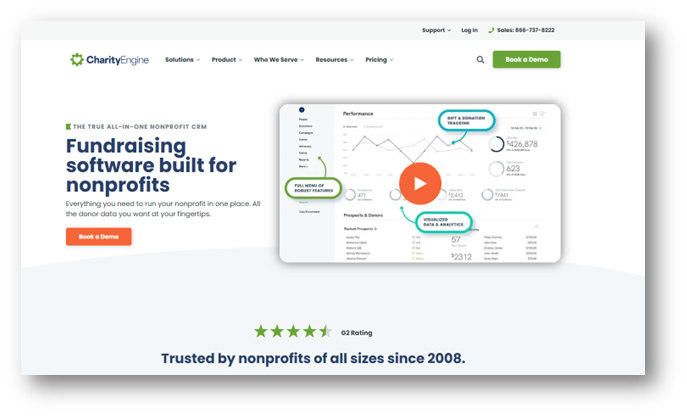
CharityEngine is an all-in-one fundraising and donor management platform, meaning every core fundraising tool is native to the platform. No syncs, no uploads—all your data is right at your fingertips, in real time.
What We Love: Only CharityEngine offers SustainerIQ, proprietary billing technology that helps nonprofits start, grow, or protect their monthly giving revenue. It's been independently certified as the premier technology for recurring gifts.
Watch Out For: This isn't the right system for very small or startup nonprofits. The technology is advanced and the platform is robust, which is more than a small org needs.
2. Bloomerang: Best for Ease of Use
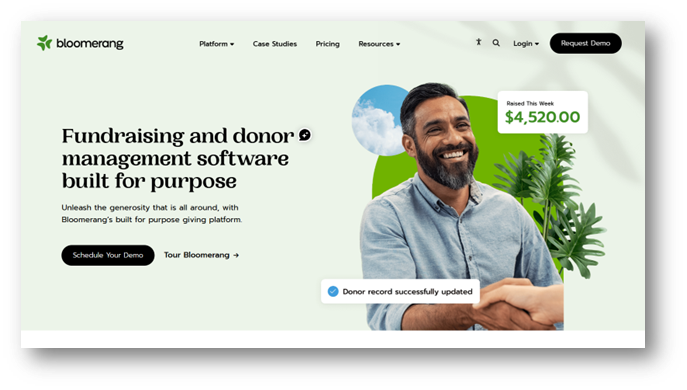
Bloomerang is a good choice for nonprofits looking for an easy-to-use platform. It offers most of the tools a small nonprofit needs and has a straightforward interface that makes navigation simple.
What We Love: It’s called delightful for a reason. It's appealing for nonprofits that want a basic user interface and really focus on donor retention, with features like supporter sentiment analysis.
Watch Out For: The functionality is limited because it’s designed for smaller organizations. You won’t find events, auctions, or major gifts here, so you will likely outgrow it quickly as your organization grows. Larger orgs won’t find customization easy, and Bloomerang sometimes gets dinged on customer service.
3. DonorPerfect: Best for Customizable Dashboards
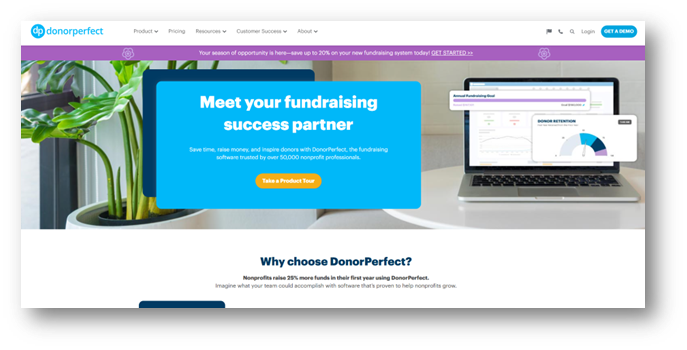
DonorPerfect is another great option for smaller nonprofits. Pricing starts lower than most, and contract terms are flexible, making it a solid choice for nonprofits just starting out or working with limited resources.
What We Love: Customizable dashboards are a must-have for insights, and DonorPerfect offers them. They have integrated online forms and reporting tools to analyze campaigns.
Watch Out For: Be careful with the pricing. Make sure you understand the tiers and what’s included, and ask what additional features might cost.
4. Virtuous: Best for Responsive Fundraising
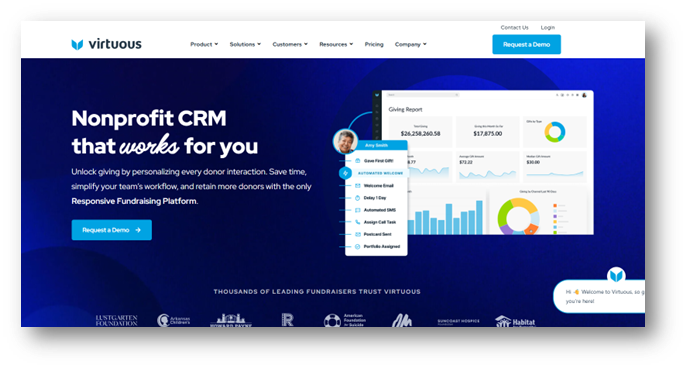
Have you read the book? Virtuous is known for coining the term “responsive fundraising,” and we have found them to be pretty forward-thinking. They offer a free responsive nonprofit summit and are a good choice for any size nonprofit.
What We Love: This is a good choice for those organizations wanting to focus on automation and personalization, two things we really like.
Watch Out For: Advanced features might be a little too complicated to learn easily, and the “all-in-one" claim doesn’t ring true when they need to connect with a network of partners to provide functionality.
5. Givebutter: Best for Free Tools
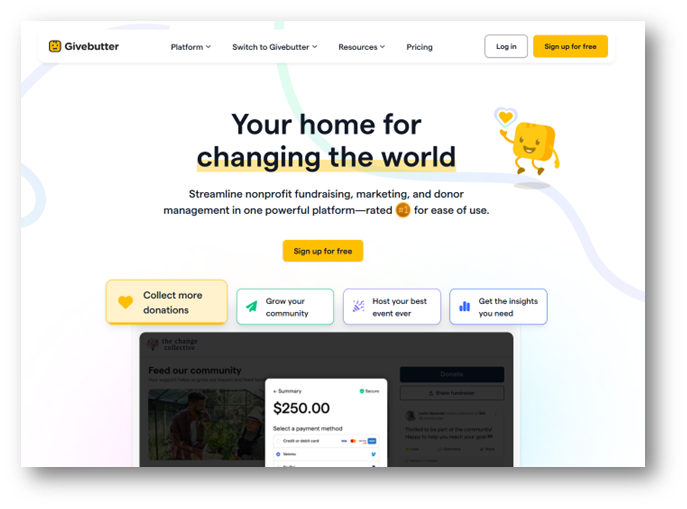
In case you missed it in the screenshot, Givebutter is big on being free donor management software. And free is an appealing hook to smaller nonprofits. It provides donor management and a CRM, fundraising pages, payment processing, and auctions, to name a few features.
What We Love: We, too, love free, because we want all nonprofits to have tools to succeed. The platform also offers a solid array of features.
Watch Out For: Free means that you choose to have your donors cover your fees instead of paying them yourself. Creative? Absolutely. But not everyone wants to pass fees on to donors, and nonprofits can be surprised by how high those fees get.
6. Blackbaud: Best for Longevity
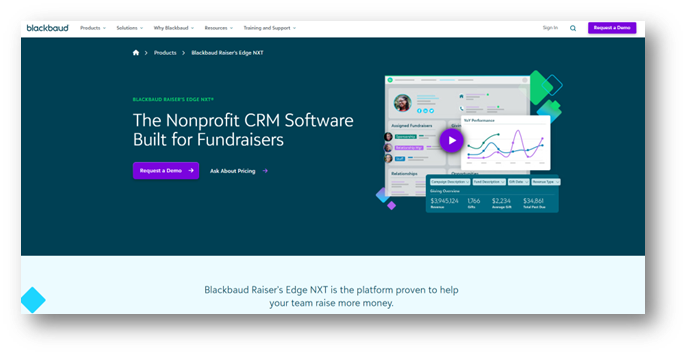
Blackbaud Raiser’s Edge NXT is undergoing a bit of a metamorphosis. It’s moving Raiser’s Edge and Financial Edge to a Total Web Solution, which means the database views are being replaced with web views. The company says this is a phased modernization of the platform. If you’re on RE7, though, that is being sunset.
What We Love: We often call Blackbaud the grandpa of nonprofit CRMs, and it’s true. It’s been around for decades. It’s a good database solution if you have a ton of contacts and you want to house a lot of data.
Watch Out For: Siloed data always complicates things, but with Blackbaud, every module is a separate system. The contact record is the hub and connects to every module, but the modules don’t connect. Nonprofits have found Blackbaud outdated, so we will watch for the new UI to see if it’s improved.
7. Salesforce/Agentforce: Best for Tech-Savvy Fundraisers
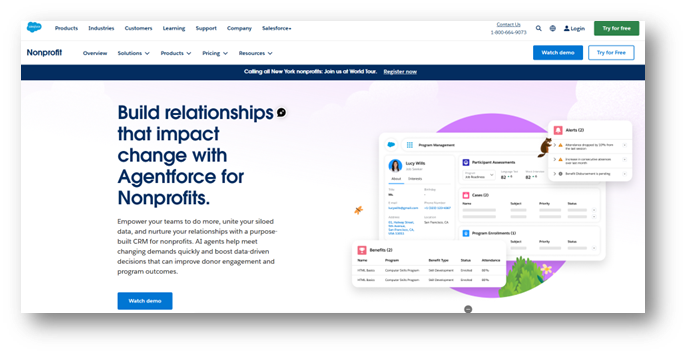
Salesforce is another big name in the industry because it’s been around forever. What was formerly Nonprofit Cloud is now Agentforce Nonprofit, and it includes AI agents designed for common workflows.
What We Love: NPSP offers comprehensive donor management and can integrate with anything. The system also offers advanced tools for reporting and analytics.
Watch Out For: We hear that it’s hard to do much with Salesforce unless you have an IT background, and that the org is so large, things move at the speed of molasses.
8. Tithe.ly: Best for Faith-Based Nonprofits or Churches
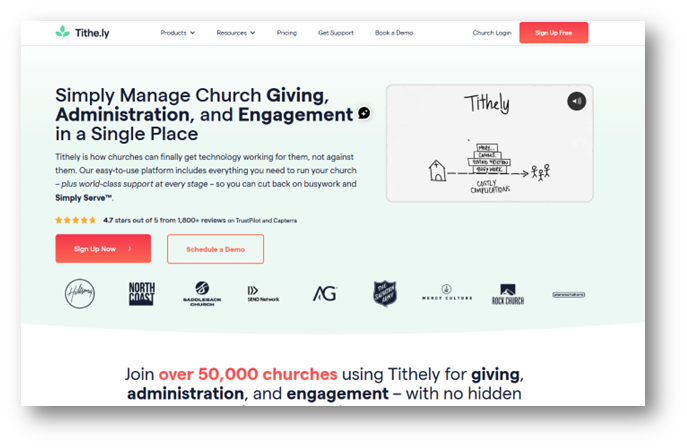
When it comes to church donor management software, Tithe.ly is an all-in-one tech stack for churches. It offers giving tools, an app, a website, and software to manage donors. If you’re a small to mid-size church looking for software to help with mobile and digital giving, you might have met your match.
What We Love: This software offers mobile giving in-app and also text-to-give. They send automated receipts and feature donor messaging.
Watch Out For: It’s hard to pick and choose what you want. You’ll likely need the entire system for full functionality.
9. Little Green Light: Best for Small Nonprofits
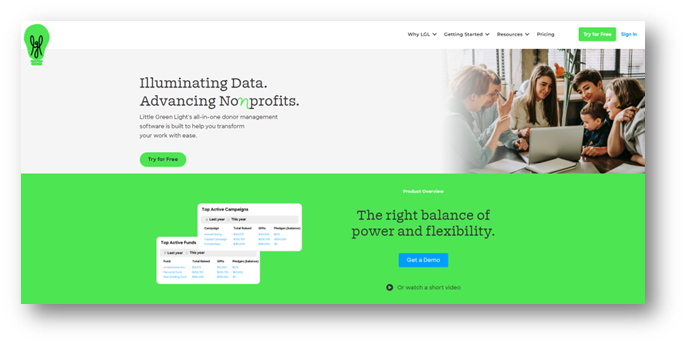
If you’re looking for a straight-shooter, Little Green Light is it. It’s user-friendly, cloud-based, and offers transparent pricing with no hidden fees.
What We Love: It’s great for new nonprofits. Pricing is really low, and this donor management software integrates with QuickBooks, making it easy to use. It even offers a free 30-day trial.
Watch Out For: It’s a good starting point, but it doesn’t offer much. You can’t customize much, and it won’t scale as your nonprofit grows.
10. Keela: Best for AI-Driven Features
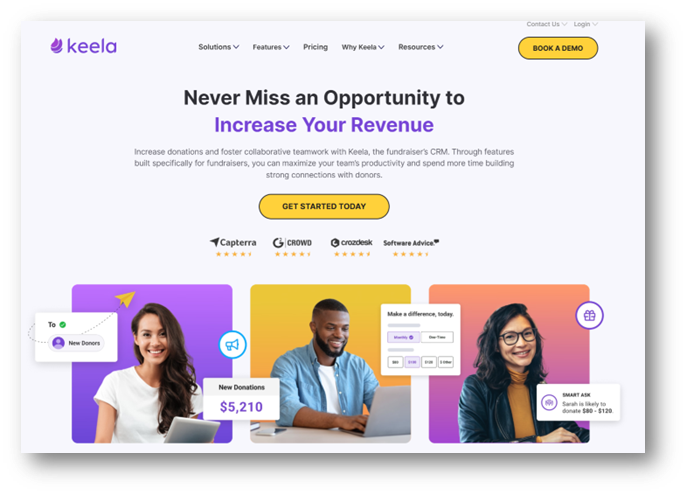
We like that Keela is women-led and has teams in different countries. It combines donor management with fundraising and marketing tools, featuring AI-driven insights. It’s good for nonprofits that are interested in adding marketing automation to their donor management.
What We Love: The Donor Pipeline tools support move management, and the Smart Ask feature suggests optimal donation asks.
Watch Out For: Because it’s based in Canada, compliance rules differ and can get complicated. There’s also a learning curve for the AI tools.
11. Bonterra: Best for Integrations
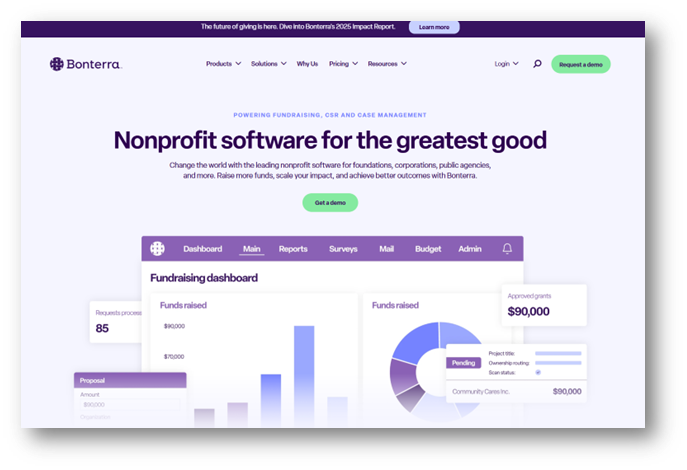
Hear us out: Bonterra has put customers through a lot of changes, and it really does require patience. That said, it’s a good option for nonprofits looking for an integrated platform.
What We Love: Because Bonterra is the product of many different systems that were bought and combined, there is a lot of functionality.
Watch Out For: It’s the product of many systems that were bought and combined! This is an industry behemoth owned by private equity, meaning the goal is to make money. You might really like your platform, but it might be shut down and replaced with something more expensive.
12. GoFundMe Pro: Best for Optimized Forms
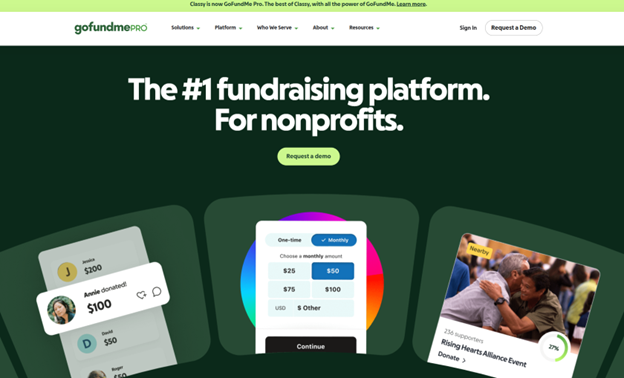
Here is another metamorphosis for you: Classy was purchased by GoFundMe, and now it’s GoFundMe Pro. The forms are still terrific, but the new platform offers a whole host of features that make it look more like a Bonterra than the beloved Classy.
What We Love: We always liked Classy’s straightforward forms and payment processing. It wasn’t a CRM, but it integrated cleanly with almost all of them.
Watch Out For: Be wary of big corporate takeovers of good platforms. They lose a little heart when they get absorbed.
13. SignUp Genius Donations: Best for Individual Donation Pages
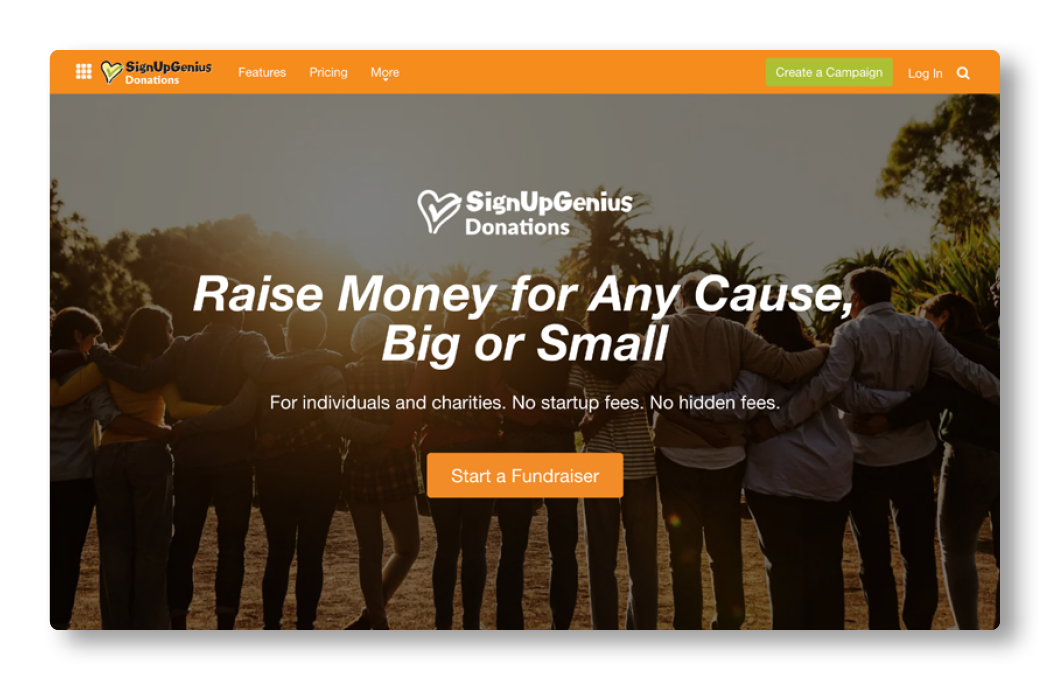
SignUpGenius Donations is the new and improved fundraising platform taking over Fundly. It’s best known for its crowdfunding campaigns, making it an excellent choice for nonprofits looking to recruit fundraisers with individual donation pages. While it isn’t a comprehensive CRM, this platform makes it easy to include donors in the fundraising process!
What We Love: SignUpGenius Donations makes it incredibly easy to launch highly visual, customizable campaign pages for specific projects or peer-to-peer initiatives.
Watch Out For: This platform is a fundraising tool, not a comprehensive donor management system. While it collects donor data, it lacks the advanced CRM, segmentation, and integration tools needed for long-term donor cultivation.
14. Donorbox: Best for Growing Nonprofits

Donorbox is a suite of fundraising tools that scale with organizations looking to move from their first online campaigns to complex, multi-channel initiatives. Fundraising features like peer-to-peer, text-to-give, and membership management make it easy for users to expand into new fundraising horizons.
What We Love: The sheer variety of Donorbox’s tools is a major plus, offering numerous options for nonprofits looking to diversify their fundraising efforts.
Watch Out For: Nonprofits may find this platform’s donor management features lacking, especially in comparison to a more robust CRM.
15. DonorSnap: Best for Affordability
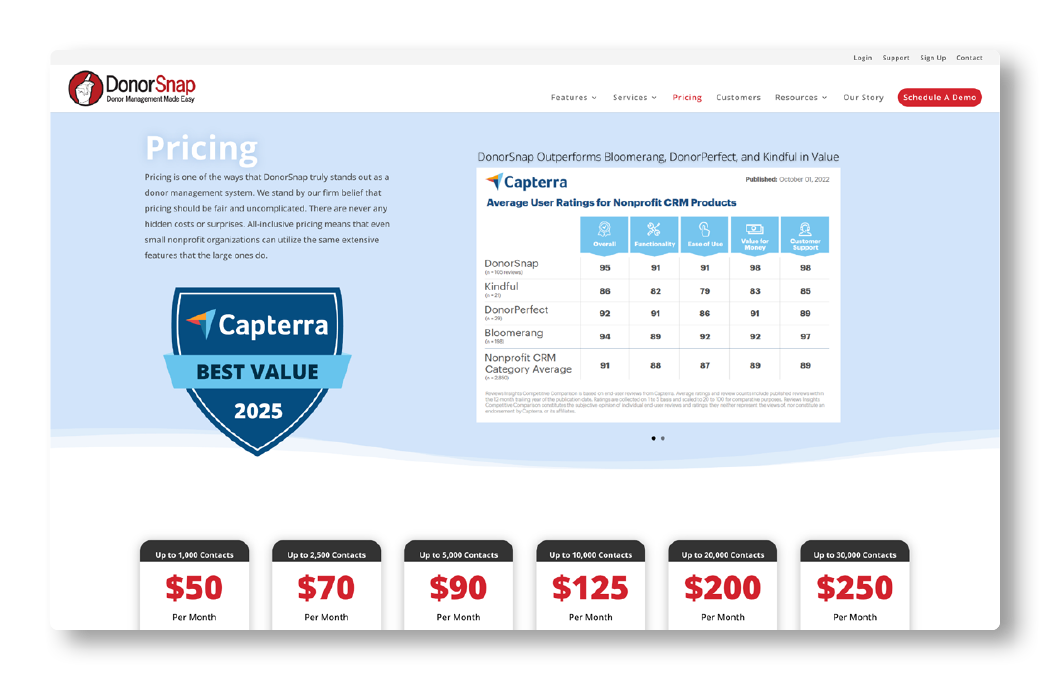
With plans starting at just $50/month, DonorSnap is an excellent option for organizations seeking a highly affordable donor management platform. Its tiered pricing is based solely on the size of your contact database, making it cost-predictable and attainable, especially for small to mid-sized organizations.
What We Love: It offers core features, including customizable forms, marketing tools, and numerous integrations, all at a reasonable price.
Watch Out For: While its core features are strong, it may lack the comprehensive functionality of all-in-one platforms.
Benefits of Donor Management Software
If you’re a smaller nonprofit getting by with spreadsheets and an email platform, spending resources on software might not seem wise. But there is an excellent solution that is sure to fit your budget and meet your needs, delivering some impressive benefits.
There are many reasons to invest in a donor management platform, including:
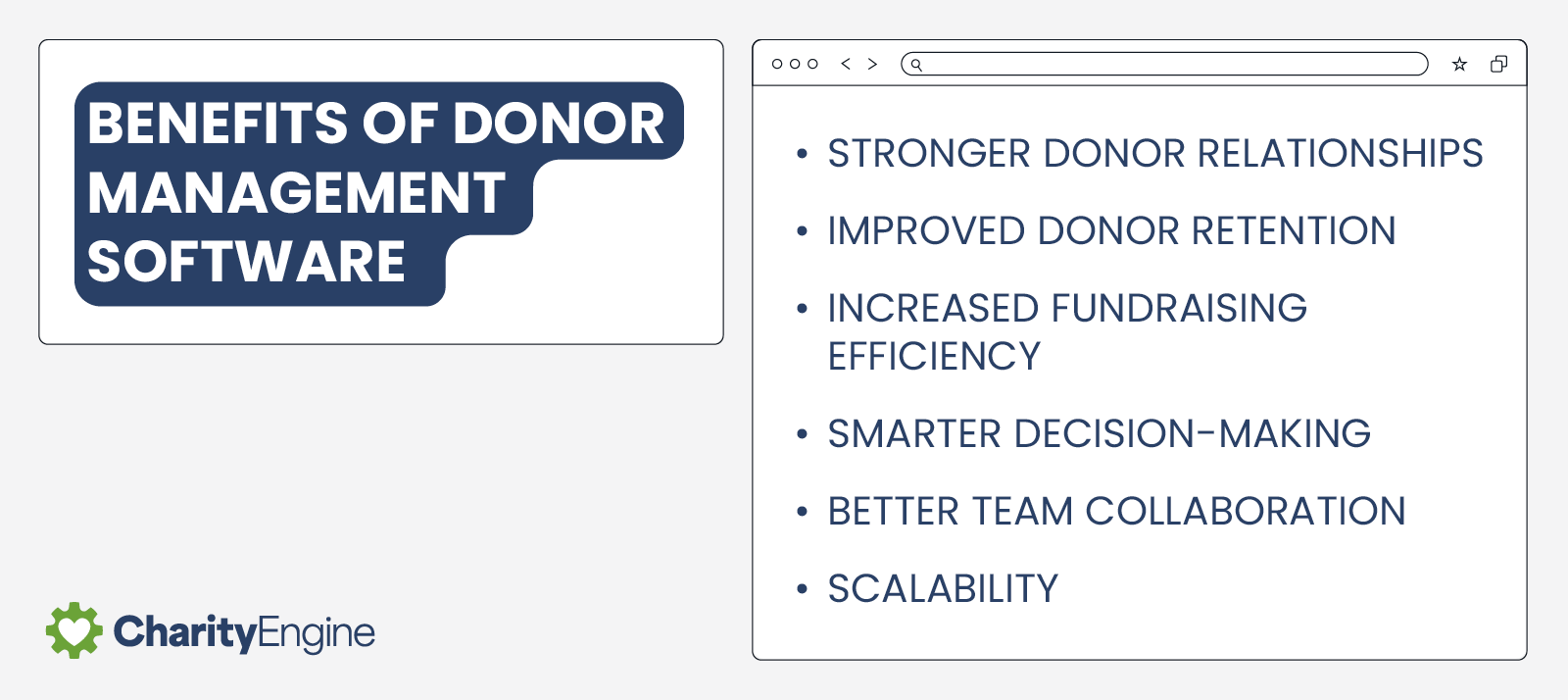
- Stronger donor relationships: You can use software to segment your donors into groups and send personalized communications that will resonate with each specific audience. As a result, you’ll replace generic, mass messaging with authentic content that makes donors feel more connected to your nonprofit.
- Improved donor retention: Donor management software tracks donor behavior, highlighting opportunities for your team to engage supporters more effectively. This means you can identify faltering donors before they lapse and improve your approach to retain them.
- Increased fundraising efficiency: The right platform automates repetitive tasks, streamlines donation processing, and runs multichannel campaigns with ease. That way, your team can focus on cultivation and retention, while the software handles the administrative tasks.
- Smarter decision-making: With all of your donor data in one centralized database, you’ll have all the information you need to make informed decisions. Use data to monitor and refine campaigns, enhance supporter outreach, and allocate resources more efficiently.
- Better team collaboration: A central system for all donor data and interactions keeps every team member up to date on donor activity. If a donor calls, a quick glance at a donor record can give any member of your staff an accurate snapshot.
- Scalability: As your nonprofit grows (and with the right donor management software, it will), the system can grow with you, supporting an increasing number of donors and transactions.
It’s hard to be an effective fundraiser without a strong platform. In fact, the right software can help even start-up nonprofits grow quickly.
How to Choose the Best Donor Management Software
As we mentioned earlier, there are numerous options for donor management platforms. To choose the best one, here are a few steps your nonprofit should follow:
Make a List of Must-Have Features
The exact features your nonprofit needs will vary by organization, but some features benefit all nonprofits. Here are a few key tools to look for as you compare systems:
- Donor database: Store detailed donor records, including giving history, communication preferences, and all engagement activities, whether donating, volunteering, or participating in outreach.
- Donation tracking: Record and report on donations, recurring gifts, pledges, and in-kind donations.
- Email and communication tools: Send targeted emails or pull a list for a thank-you phone-a-thon. Send newsletters right from your system or send text reminders about an event or campaign.
- Segmentation and personalization: Group donors based on behavior, demographics, giving patterns, or any characteristic you choose that will help you tailor outreach.
- Online giving and forms: Create customized donation forms, event registrations, and peer-to-peer fundraising pages.
- Reporting and analytics: Turn your data into dashboards that illuminate trends and help you forecast growth. Run reports that measure everything from campaign performance to donor retention.
- Task and activity management: Keep all your tasks and follow-up calls or meetings straight. Set reminders and organize your schedule so nothing falls through the cracks.
- Integrations: While you can choose an all-in-one CRM, you might still need to integrate it with other systems essential to your organization, such as software specific to healthcare, advocacy, or educational nonprofits. If that’s the case, you’ll want to be certain the system has robust APIs for integration.
Beyond these features, consider your most effective fundraising strategies. Email is likely one of them, but are you also focused on SMS? Or are you more concerned with advocacy than raising money? Think about your nonprofit and develop a list of features that will benefit your team.
Set a Budget
Before you can start reviewing software options, knowing how much you’re able to spend is a helpful starting point. Not only will this help you focus on the platforms that make the most sense for your team, but it also ensures your organization is prepared for the costs you’re about to take on.
That’s because the sticker price for donor management software is rarely the total cost. There are many factors to consider when setting a budget for your new software, including:
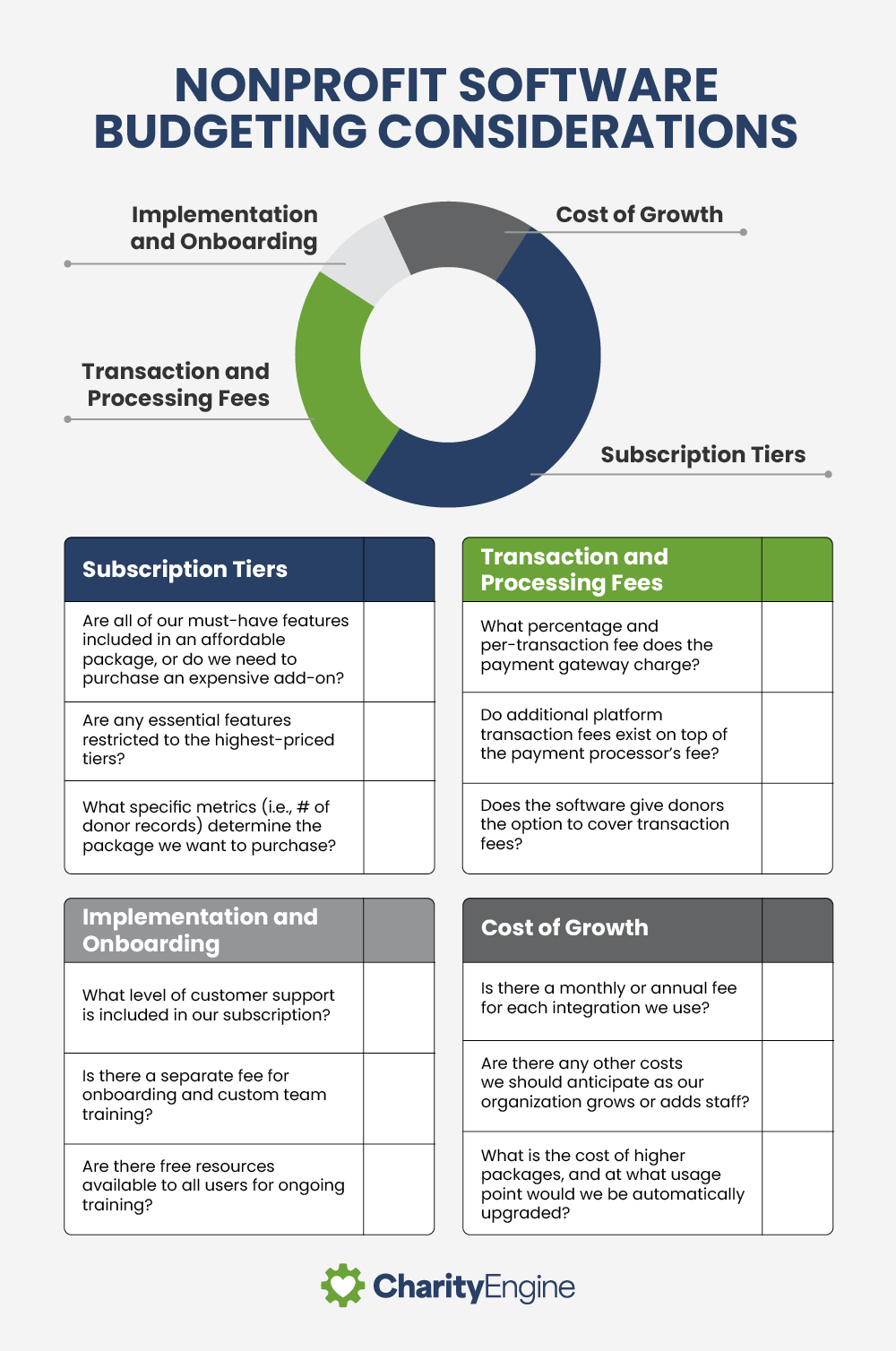
- Subscription Tiers
- Are all of our must-have features included in an affordable package, or do we need to purchase an expensive add-on?
- Are any essential features restricted to the highest-priced tiers?
- What specific metrics (e.g., # of donor records) determine the package we want to purchase?
- Is it possible to exceed these metrics, and if so, will we be charged an overage fee?
- Transaction and Processing Fees
- What percentage and per-transaction fee does the payment gateway charge?
- Do additional platform transaction fees exist on top of the payment processor's fee?
- Does the software give donors the option to cover transaction fees?
- Implementation and Onboarding
- What level of customer support is included in our subscription?
- Is there a separate fee for onboarding and custom team training?
- Are there free resources available to all users for ongoing training?
- Cost of Growth
- Is there a monthly or annual fee for each integration we use?
- Are there any other costs we should anticipate as our organization grows or adds staff?
- What is the cost of higher packages, and at what usage point would we be automatically upgraded?
Because numerous factors influence the total price of a platform, it’s often best to consult with a vendor’s sales team to inquire about any additional costs. Don’t assume that the pricing listed on a vendor’s website is the total cost of the software, and prepare a list of budget considerations to talk over with the software providers you’re most interested in.
Research Providers and Book Demos
Once you know what you’re looking for (and at what price point), it’s time to start evaluating your options. Don’t worry—we’ll get to our roundup of the best donor management software options shortly.
There are some things you’ll need to know about a platform beyond its features and price, which is why it’s essential to speak with the software provider. When you’ve identified the solutions that generally match what you’re looking for, schedule a demonstration of the software and prepare a list of questions to ask each vendor.
Start Using The Donor Management Software That Fits Your Mission
Hopefully, this list helped you narrow down your choices. It’s not about the most features or the highest or lowest price tag—it's about finding the right platform for your nonprofit now that can also grow with you.
Start by scheduling a few software demos and see if you find a match. If not, keep going! Your ideal partner is out there, just waiting to help you grow.

Scale Your Fundraising
See how top-performing nonprofits keep a human touch while growing rapidly.
Schedule your 15-minute call
.png)
.png)