
%20(27).png)
As your nonprofit grows, everything gets just a little more complicated. Fortunately, there’s often a software solution to help you increase efficiency and reduce the risk of human error.
Nonprofit case management software can have a significant impact on your operations. Gartner defines case management solutions as "applications designed to support a complex process that requires a combination of human tasks and electronic workflow."
It helps nonprofits coordinate services, track client interactions, manage documentation, and measure outcomes across programs. Learn more about how case management software for nonprofits fits into an integrated nonprofit platform.
Whether your organization provides human services, health-related support, housing assistance, workforce development, or community programs, the right system can streamline intake, service planning, follow-ups, compliance reporting, and long-term impact tracking.
But we get it – the options can be overwhelming. So we’ve compiled a list of 16 excellent case management software solutions and listed their top features. With this list, you can narrow your choices until you have just a few to call for demos.
One thing to note… some of these platforms are standalone case management systems, while others include case tracking as part of a broader nonprofit CRM. Depending on your current tech stack, you might be looking for one or the other. We talk a little about the differences between the two after the list of vendors.
Comparison Table: Nonprofit Case Management Systems
| Platform | Stand-alone or CRM | Integrations | Ideal For |
| CharityEngine | CRM | Built-in fundraising, payments, communications | Orgs wanting tools and donor data unified |
| Bonterra Apricot | Stand-alone | Integrates with select external systems | Compliance-heavy programs needing structured reporting |
| Casebook | Stand-alone | Integrates with agency systems | Human services agencies with complex workflows |
| CaseWorthy | Stand-alone | Integration options available | Multi-program service organizations |
| CharityTracker | Stand-alone | Cross-agency data sharing | Community nonprofits and collaborative networks |
| Community CareLink | Stand-alone | Health and service system integrations | Referral-based and SDoH-focused programs |
| FAMCare | Stand-alone | Integration options available | Agencies handling sensitive client data |
| Foothold | Stand-alone | Interoperable with health systems | Agencies balancing documentation and billing |
| InfoFlo | Stand-alone | Basic integration options | Orgs prioritizing unified client visibility |
| Notehouse | Stand-alone | Limited integrations | Teams focused on documentation simplicity |
| PlanStreet | Stand-alone | Integrates with external systems | Expanding nonprofits with multi-program needs |
| LiveImpact | CRM | Donor, volunteer, and CRM integrations | Orgs wanting service and engagement data together |
| Sumac | CRM | Fundraising and volunteer modules | Smaller nonprofits combining service and development |
| Salesforce (Agentforce) | CRM | Extensive AppExchange ecosystem | Orgs needing deep customization and AI automation |
| NewOrg | Stand-alone | Basic integration options | Structured case tracking with scheduling needs |
| TraxSolutions | Stand-alone | Integration options available | Goal-focused service delivery programs |
1. CharityEngine
 Overview
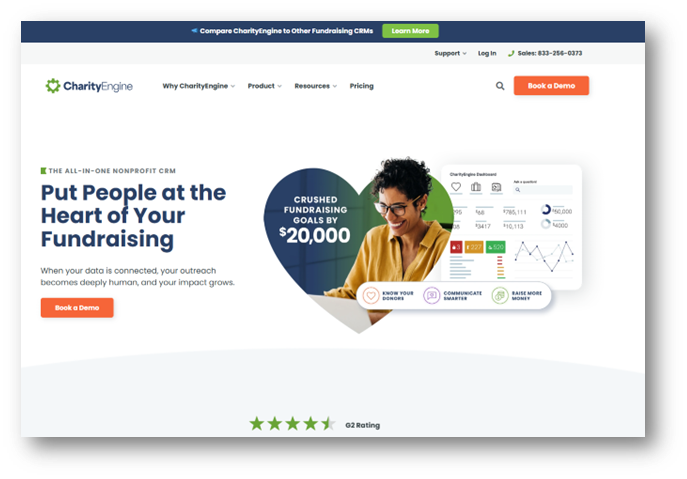
CharityEngine offers case management functionality within its broader nonprofit CRM platform. Rather than operating as a standalone system, case tracking lives alongside fundraising tools, donor management software, communications, events, and payment processing, all in a single unified database. Because CharityEngine also includes nonprofit payment processing, service, and donation data, this data can live in the same system.
Key Features
- Centralized case records connected to full constituent profiles
- Automates task assignments and status updates
- Workflow-driven follow-up reminders
- Configurable intake forms and response templates
- Reporting tools to analyze case trends and outcomes
Who it's For
If you’d rather not juggle separate systems for service tracking and constituent data, this approach keeps everything connected in one place.
2. Bonterra Apricot
Overview
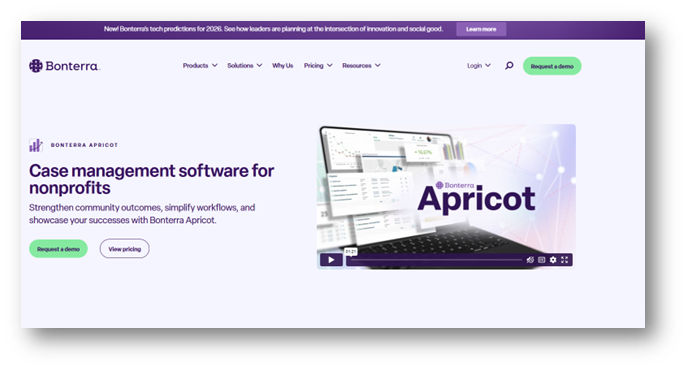
Bonterra’s Apricot platform is designed for nonprofits and public sector organizations that need structured participant tracking and outcome reporting. It focuses heavily on program management and compliance documentation.
Key Features
- Customizable intake forms and participant records
- Workflow automation and task tracking
- Built-in outcome measurement and reporting tools
- Role-based access controls and security settings
- Dashboard views of program performance
Who it's For
This can make sense for organizations that need structured reporting and clearly documented program outcomes.
3. Casebook
Overview
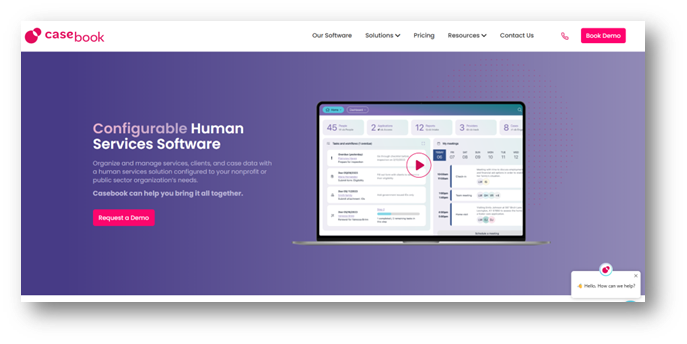
Casebook provides configurable case management tools built specifically for human services agencies. The platform emphasizes flexible workflows and detailed documentation features.
Key Features
- Custom case and client record configuration
- Structured case notes and documentation tools
- Automated workflows and task reminders
- Reporting dashboards for program oversight
- Collaboration tools for team coordination
Who it's For
A strong option for agencies that want flexibility and room to shape workflows around how their teams really work.
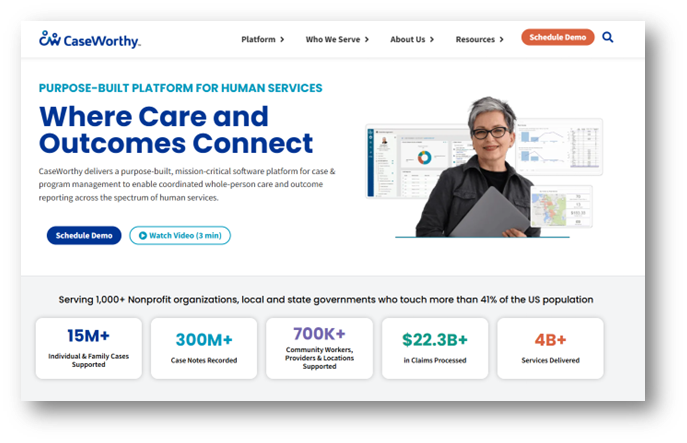
4. CaseWorthy
Overview
CaseWorthy offers a platform that integrates program management and client tracking into a centralized system. It focuses on helping nonprofits align service delivery with measurable outcomes.
Key Features
- Customizable workflows and form builders
- Unified client and service data tracking
- Referral and service history documentation
- Secure data management with compliance controls
- Reporting tools for performance analysis
Who it's For
Worth exploring if your programs vary widely and you need processes that can adapt without constant workarounds.
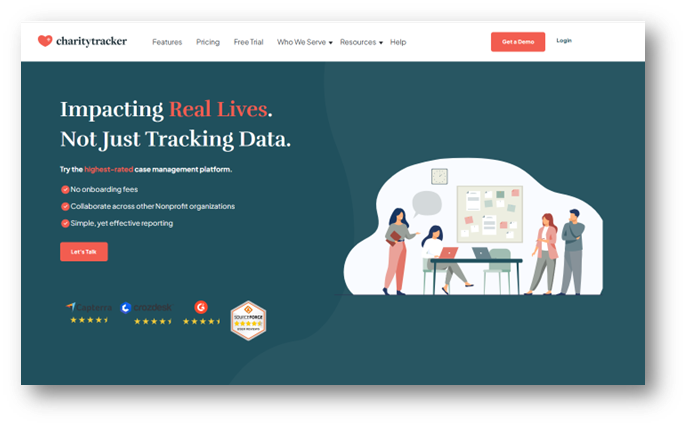
5. CharityTracker
Overview
CharityTracker is a cloud-based case management platform used by community nonprofits, food banks, shelters, and churches. It emphasizes ease of use and cross-agency collaboration.
Key Features
- Client intake and assistance tracking
- Cloud-based case notes and documentation
- Cross-agency data sharing options
- Reporting tools for funders and boards
- Duplicate prevention and real-time updates
Who it's For
Often chosen by community-based organizations that want straightforward intake tools and shared visibility across partners.
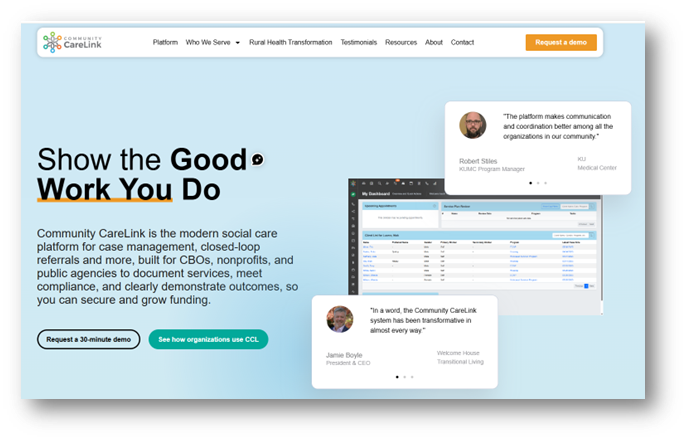
6. Community CareLink
Overview
Community CareLink focuses on referral management and workflows for social determinants of health. It is often used by organizations coordinating services across networks.
Key Features
- Referral tracking and follow-up monitoring
- Social determinants of health documentation
- Secure case documentation tools
- Custom reporting and data exports
- Integration with external service systems
Who it's For
A practical fit for teams coordinating referrals across multiple providers or managing health-related service networks.
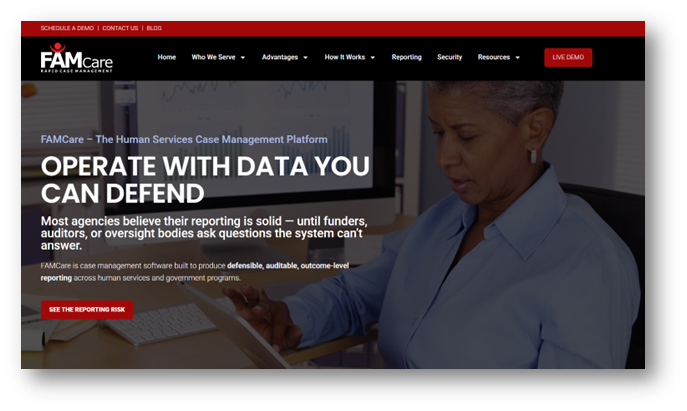
7. FAMCare
Overview
FAMCare provides case management tools for human services agencies and organizations handling sensitive client data. The platform emphasizes security and structured serviceworkflows.
Key Features
- Client and provider portals
- Referral management and service tracking
- Scheduling and task management tools
- Role-based security permissions
- Remote access capabilities
Who it's For
May resonate with organizations that handle sensitive data and need structured service documentation with clear security controls.
8. Foothold
Overview
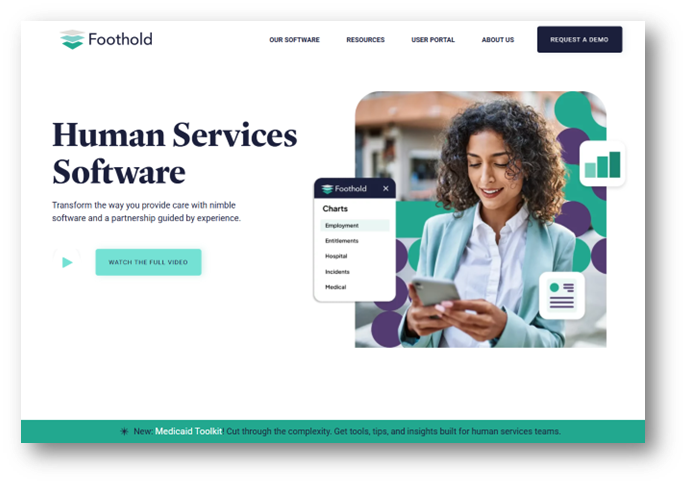
Foothold offers a configurable platform with tools for documentation, service planning, reporting, and billing. It serves nonprofits with multifaceted service programs.
Key Features
- Flexible intake and documentation builders
- Custom report generation tools
- Service plan and intervention tracking
- Interoperability with health and human service systems
- Billing and activity tracking modules
Who it's For
A thoughtful choice for agencies balancing documentation, reporting, and billing within the same operational flow.
9. InfoFlo
Overview
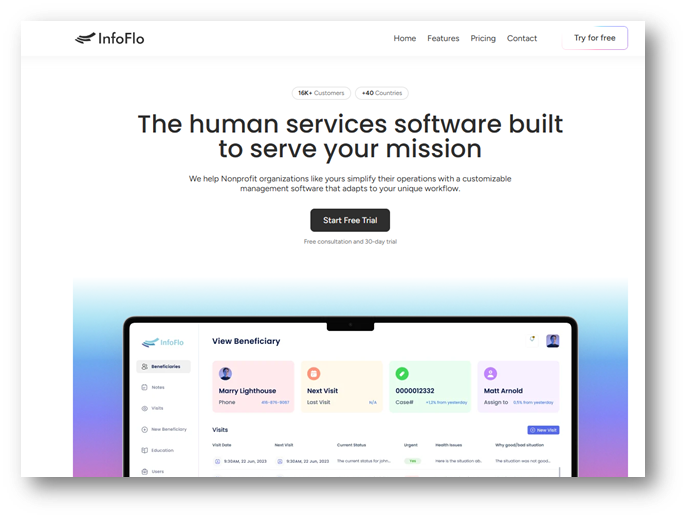
InfoFlo provides case management functionality centered on a 360-degree client view. The system aims to consolidate contact history, appointments, and service notes in one place.
Key Features
- Comprehensive client dashboards
- Centralized notes and service records
- Appointment and calendar management
- Document storage tied to client profiles
- Reporting and analytics views
Who it's For
Can work well for teams that value seeing the full client picture without jumping between screens or systems.
10. Notehouse
Overview
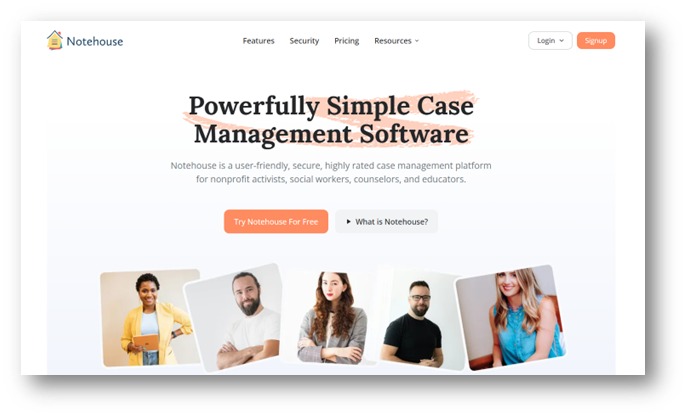
Notehouse focuses on documentation efficiency in case management environments. The platform emphasizes fast note-taking and retrieval for case workers.
Key Features
- Cloud-based case notes
- Mobile-friendly access
- Tagging and search functionality
- Secure data storage
- Quick client summary views
Who it's For
A streamlined option for organizations that mainly need fast, organized documentation without unnecessary complexity.
11. PlanStreet
Overview
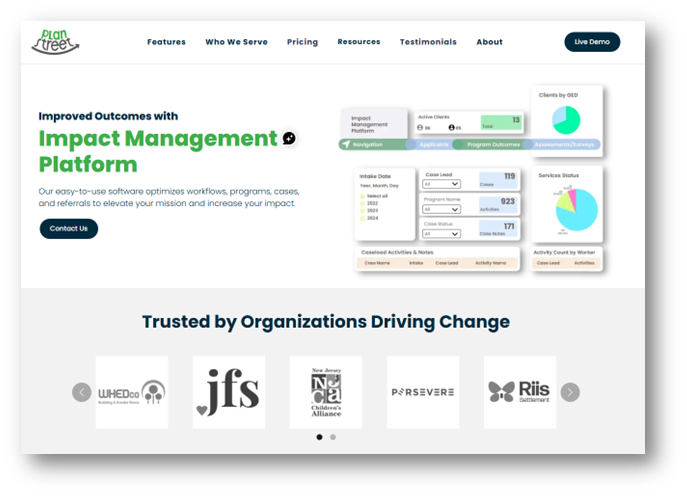
PlanStreet provides case management software with configurable workflows and analytical tools. It supports nonprofits and public sector agencies in managing complex service programs.
Key Features
- Customizable intake-to-closure workflows
- Configurable forms and templates
- Analytics dashboards and reporting tools
- Integration with external systems
- Multi-program tracking capabilities
Who it's For
A solid consideration for nonprofits with evolving programs that need flexible workflows and reporting that grow with them.
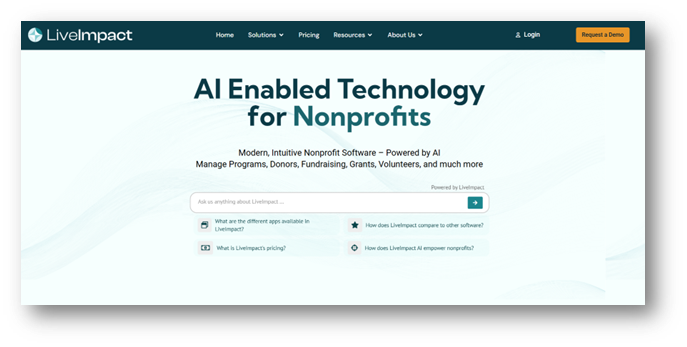
12. LiveImpact
Overview
LiveImpact combines case management tools with broader nonprofit CRM features, including volunteer and fundraising functionality.
Key Features
- Custom intake forms and case workflows
- Outcome dashboards and reporting
- Automation and AI-assisted reminders
- Volunteer and donor data integration
- Compliance-ready configuration options
Who it's For
Could appeal to organizations that prefer keeping program data and broader nonprofit operations in the same ecosystem.
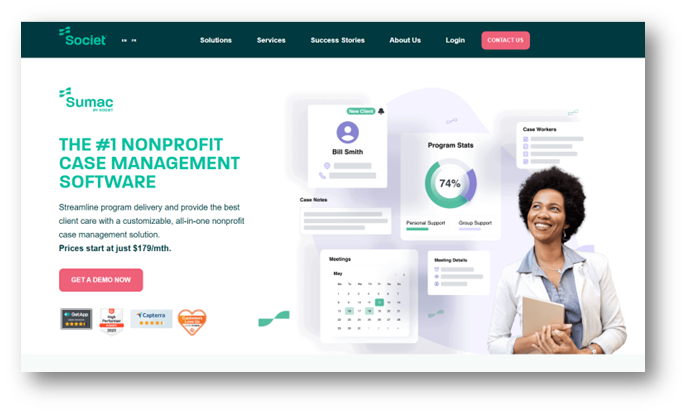
13. Sumac
Overview
Sumac offers case management within a system that also includes donor, volunteer, and grant-tracking tools. It emphasizes configurability and consolidated nonprofit data.
Key Features
- Customizable client and case database
- Web-based intake forms
- Case portals with reminders and notes
- Reporting and export tools
- Optional modules for fundraising and volunteer tracking
Who it's For
Makes sense for nonprofits looking to combine service tracking with fundraising or volunteer data under one roof.
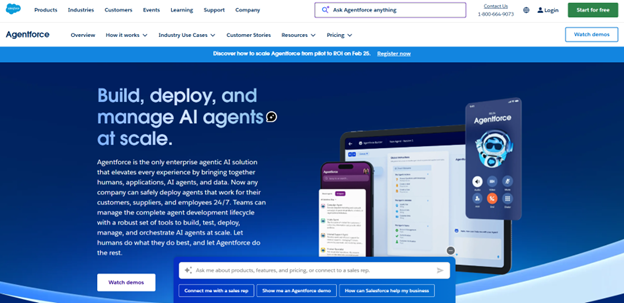
14. Salesforce (with Agentforce for Nonprofits)
Overview
Salesforce offers case management capabilities within its broader CRM platform, with increasing emphasis on Agentforce, its AI-driven automation and assistance layer. Organizations can configure case workflows, service tracking, and reporting in Salesforce while using Agentforce to streamline tasks and surface insights.
Key Features
- Customizable case intake, referral tracking, and service workflows
- Agentforce AI for automation, summarization, and task assistance
- Configurable dashboards and advanced reporting tools
- Workflow automation through Salesforce Flow
- Extensive third-party integrations through AppExchange
Who it's For
Often considered by organizations that want deep customization and are comfortable investing time in configuring workflows and AI tools to match how their programs operate.
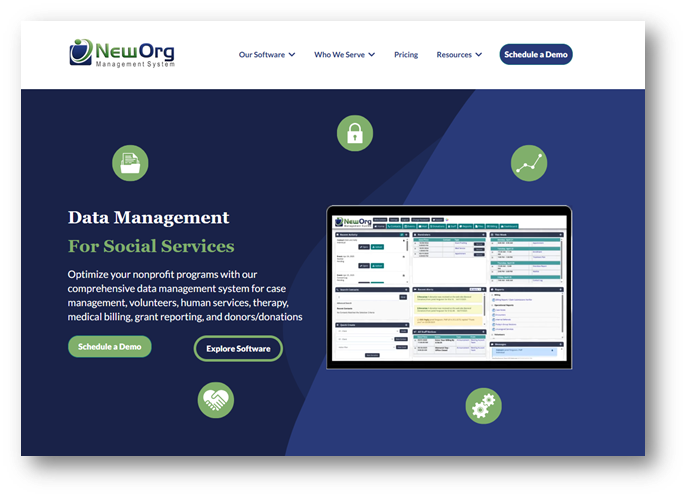
15. NewOrg
Overview
NewOrg provides case management software aimed at nonprofits and service agencies that need structured client documentation and scheduling tools.
Key Features
- Custom case record tracking
- Scheduling and reminder tools
- Secure client portals
- Reporting and analytics modules
- Team collaboration features
Who it's For
May suit nonprofits that want structured case tracking and scheduling tools without overcomplicating the setup.
16. TraxSolutions (by nFocus Solutions)
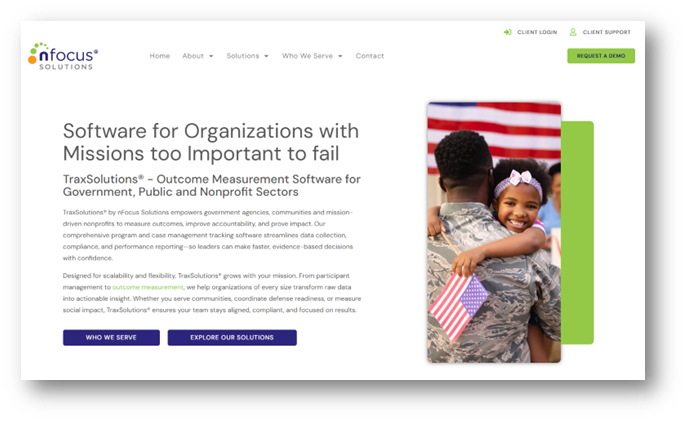
Overview
TraxSolutions offers goal-driven case management with tools for tracking action plans and outcomes across programs.
Key Features
- Configurable client profiles and goals
- Action plan tracking
- Outcome measurement tools
- Secure centralized documentation
- Integration options with other systems
Who it's For
A reasonable path for teams that center their work around measurable goals and clearly documented client progress.
How We Evaluated These Case Management Platforms
There’s no single “right” case management system for every nonprofit. Programs vary. Compliance requirements differ. Some organizations need deep specialization in service workflows, while others want service data connected to fundraising and engagement.
To create this list, we looked at several core areas thatconsistently matter to nonprofit leaders and program managers.
Configurability of workflows
No two service models are identical. We evaluated how flexible each platform is regarding intake forms, assessments, case notes, service plans, and follow-up processes. Systems that allow organizations to tailor fields, automate tasks, and adapt workflows to real-world operations scored higher in this category.
Reporting and outcomes tracking
Many nonprofits must demonstrate measurable impact to funders, boards, and partners. We reviewed each platform’s ability to generate structured reports, strong nonprofit reporting and analytics capabilities, dashboards, and outcome metrics, as well as how easily teams can extract data for grant reporting and performance evaluation.
Compliance and security options
For organizations handling sensitive client information, security is non-negotiable. We considered role-based permissions, audit trails, encryption standards, and whether platforms support compliance with HIPAA and other regulatory frameworks.
Integration capabilities
Case management rarely exists in isolation. We examined how well each system integrates with other tools, including CRM platforms, accounting software, electronic health records, communication tools, and third-party applications. Integration flexibility can significantly reduce duplicate data entry and system silos.
Scalability across programs
Nonprofits often grow, add programs, or expand geographically. We looked at whether each platform can support multiple service lines, varied workflows, and increasing user counts without requiring a full system replacement.
Standalone vs. CRM-based architecture
Some solutions operate as dedicated case management platforms, while others include case tracking as part of a broader nonprofit CRM. We considered how this architectural difference may impact data visibility, operational alignment, and long-term strategy, particularly for organizations that want service data connected to fundraising or constituent engagement.
By evaluating each platform across these dimensions, this list aims to provide a structured, transparent overview that goes beyond surface-level feature comparisons and supports more informed decisionmaking.
Standalone vs. CRM-Based Case Management
Let’s take a quick second to clarify a difference we noted at the top of the article.
Not all case management software is built the same way. One of the biggest structural differences between platforms is whether they operate as standalone systems or as part of a broader nonprofit CRM. Tools can reduce the time spent on program audits by making reporting more efficient.
Standalone case management platforms are designed specifically for service delivery. They often offer highly detailed intake forms, structured documentation tools, assessment workflows, and outcome tracking tailored to human services programs. For organizations with complex service requirements or strict compliance standards, this depth can be important.
CRM-based case management systems, such as an all-in-one nonprofit CRM, include case tracking as one component of a larger ecosystem. In these systems, service data lives alongside donor records, volunteer engagement, communications, and fundraising activity. This approach can reduce data silos and provide a more unified view of constituents, particularly when the same individual may interact with your organization in multiple ways. This can be especially valuable when service data needs to connect directly with fundraising software and donor engagement tools.
There is a natural trade-off between specialization and unification.
Standalone systems may provide deeper service workflow customization out of the box. CRM-based systems may offer broader organizational visibility and fewer disconnected databases.
Understanding which model aligns with your long-term strategy can significantly narrow your shortlist before you ever request a demo. If you're evaluating broader systems, you may want to compare nonprofit CRM platforms before making a final decision.
Case Management Features Worth Comparing
Before scheduling demos, it helps to understand which features matter most in nonprofit case management software. While every organization’s needs differ, most evaluation conversations return to a core set of capabilities. Comparing platforms across these areas can help you quickly narrow your shortlist and focus on systems that align with your service model.
When evaluating nonprofit case management software, consider:
- Intake and intake form flexibility – Can you customize forms, assessments, and required fields to match your programs without complex development work?
- Case notes and documentation quality – Does the system make it easy for staff to log detailed notes, attach files, and track service history in an organized way?
- Automation and task scheduling – Can you assign follow-ups, trigger reminders, and automate routine workflows to reduce manual work?
- Reporting and analytics depth – Are dashboards and reports configurable enough to meet funder requirements and demonstrate measurable outcomes?
- Integration with CRM, EHR, and communication tools – Does the platform connect with your donor database, accounting software, health systems, or email platforms to reduce data silos?
- Security and compliance options – Are there role-based permissions, audit trails, encryption standards, and compliance features that match your regulatory requirements?
Understanding these features upfront makes it easier to evaluate vendors based on operational fit rather than marketing language alone.
How to Choose the Right Case Management Software for Your Nonprofit
Selecting case management software isn’t just about checking feature boxes. It’s about understanding how your programs operate today…and how you expect them to grow.
Start by mapping your intake process, documentation requirements, reporting obligations, and collaboration needs. Consider whether your team needs deep specialization in service workflows or would benefit from connecting case data with donor, volunteer, and communication tools in a unified CRM.
Some organizations prioritize compliance and structured reporting. Others prioritize flexibility and ease of use. Still others want service and fundraising data to work together rather than live in separate systems.
The best next step isn’t choosing from a list; it’s narrowing the list to three or four platforms that align with your model, requesting demos, and asking vendors to walk through your real workflow scenarios. You can also find information on vendor websites to see what type of support they offer. We publish content so nonprofits understand what it's like to work with CharityEngine.
When software mirrors how your organization really serves people, case management becomes less about data entry and more about impact.
Frequently Asked Questions About Case Management Software for Nonprofits
What is case management software for nonprofits?
Case management software for nonprofits is a system used to track client information, manage service delivery, document interactions, and measure program outcomes. It typically includes intake forms, case notes, task tracking, reporting tools, and security controls to help organizations coordinate services efficiently and maintain accurate records.
How is case management software different from a nonprofit CRM?
Case management software focuses primarily on service delivery workflows, including intake, documentation, referrals, and outcome tracking.
A nonprofit CRM, by contrast, is designed to manage donor relationships, fundraising, communications, and engagement.
Some platforms operate as standalone case management systems, while others include case tracking within a broader CRM. The right choice depends on whether your organization wants service data and fundraising data connected in a unified database.
Do nonprofits need HIPAA-compliant case management software?
Not all nonprofits require HIPAA compliance. HIPAA applies when an organization handles protected health information (PHI) under specific regulatory definitions.
If your nonprofit provides healthcare services or manages medical data, HIPAA-compliant software may be necessary. For other service-based organizations, strong security controls and role-based access may be sufficient even if HIPAA does not formally apply. You can read more about how this applies to software in our guide on HIPAA compliance and nonprofit CRMs.
What features should nonprofits look for in case management software?
Common features to evaluate include:
- Customizable intake forms and workflows
- Case notes and documentation tools
- Task assignment and follow-up reminders
- Reporting and outcome tracking dashboards
- Role-based security permissions
- Integration with CRM, accounting, or EHR systems
The importance of each feature depends on your service model and reporting requirements.
Can case management software integrate with fundraising tools?
Yes. Some platforms offer integrations with nonprofit CRMs, accounting systems, and communication tools.
CRM-based case management systems often include fundraising and donor engagement features natively, allowing service and development data to live in the same system. Standalone systems may require third-partyintegrations to achieve this connection.
How much does nonprofit case management software cost?
Pricing varies significantly depending on:
- Number of users
- Level of workflow customization
- Reporting depth
- Compliance requirements
- Integration needs
Some systems offer tiered pricing for small organizations, while enterprise platforms typically require custom quotes. Implementation and training costs should also be factored into the total investment.
For a breakdown of pricing factors, see our guide to how much a nonprofitCRM costs.
What is the difference between standalone and CRM-based case management systems?
Standalone systems specialize in service workflows and detailed documentation.
CRM-based systems combine case tracking with donor, volunteer, and communications data in a single unified database.
Standalone platforms may offer deeper, service-specific functionality, while CRM-based systems reduce data silos and provide broader organizational visibility.
How long does it take to implement case management software?
Implementation timelines vary depending on system complexityand organizational readiness.
Smaller nonprofits can implement configurable, out-of-the-box workflows within weeks. More complex organizations that require custom fields, automation rules, and integrations may take several months to fully deploy.
What questions should nonprofits ask in a case management software demo?
Nonprofits should ask vendors to walk through real-world workflows, not just features. Request a demonstration of intake forms, case notes, task automation, reporting dashboards, and how the system handles referrals or multi-program tracking. It’s also important to ask how the software integrates with your existing CRM, accounting tools, communication platforms, or EHR systems, and what implementation and training support looks like.
Can nonprofit case management software grow with an organization?
Yes, many nonprofit case management systems are designed to scale as programs expand. Look for platforms that support multiple service lines, configurable workflows, additional users, and increasing reporting complexity without requiring a system replacement. Scalable systems should allow you to add new programs, locations, or integrations as your organization grows.

Scale Your Fundraising
See how top-performing nonprofits keep a human touch while growing rapidly.
Schedule your 15-minute call%20(10).png)
-3.png)
.png)